
Last updated: 11 October 2026
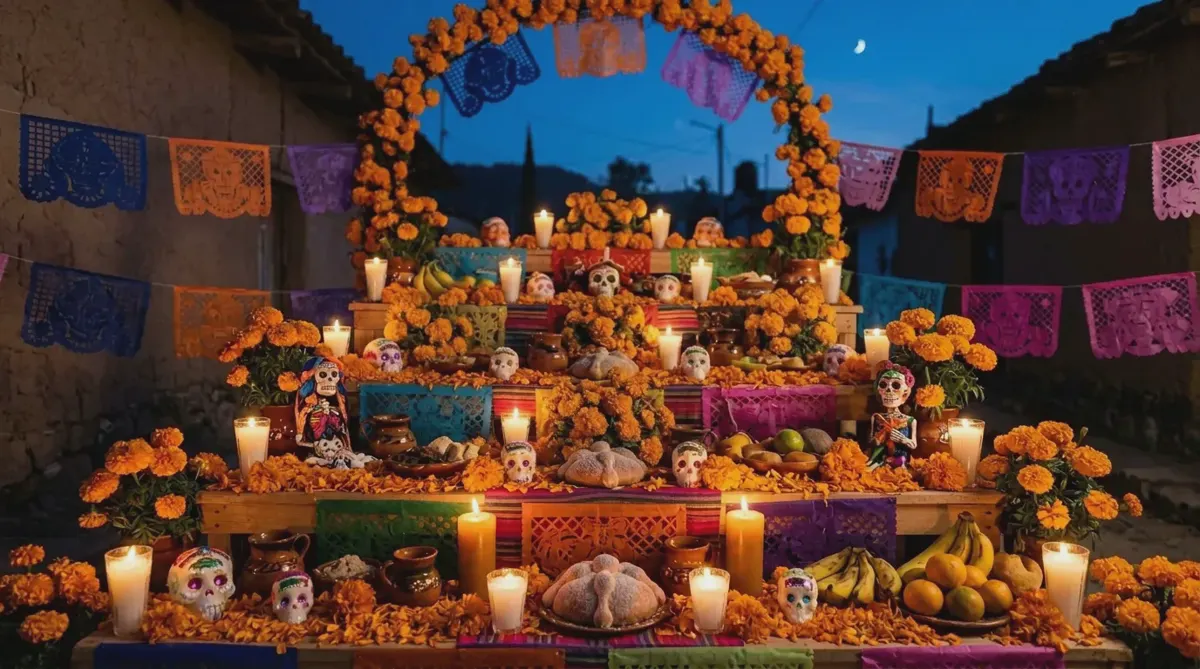
Día de Muertos, the Day of the Dead, is when families across Mexico welcome back the souls of the people they have lost: altars at home heaped with marigolds, candles and food, cemeteries lit through the night, and in Mexico City a parade that now draws more than a million people. The main days are 1 and 2 November, which fall on a Sunday and a Monday in 2026, and the celebrations build through the week before. Here is what is confirmed for 2026 on 11 October, where to go, what the US State Department says about each place, and how to stay online in the crowds.
Day of the Dead 2026 at a glance
| Details | Status on 11 October 2026 | |
|---|---|---|
| Day of the Dead | Sunday 1 and Monday 2 November 2026 | Fixed dates every year |
| Mexico City: Gran Desfile (the big parade) | Saturday 31 October 2026, 14:00, Paseo de la Reforma to the Zócalo | Date set by the city's Secretaría de Cultura; time and route from the city's tourism site |
| Mexico City: Monumental Ofrenda in the Zócalo | 29 October to 2 November 2026 | Listed by the city's tourism site |
| Mexico City: Mixquic | 31 October to 2 November, the Alumbrada on the night of 2 November | Listed by the city's tourism site |
| Michoacán: Noche de Muertos week (Pátzcuaro, Janitzio, Morelia) | 23 October to 2 November 2026 | Announced by the state government on 28 September 2026 |
| Riviera Maya: Festival de Vida y Muerte at Xcaret | 30 October to 2 November 2026 | Announced by Grupo Xcaret on 12 August 2026 |
| Oaxaca: Gran Comparsa | Saturday 31 October 2026, 18:00, within a program from 26 October to 3 November | Reported by the press, not yet on the official site |
| Mérida: Paseo de las Ánimas | Friday 30 October 2026, from 18:00, within the Festival de las Ánimas from 24 October to 2 November | Reported by the press, not yet on the official site |
| Mexico City Grand Prix (Formula 1) | 30 October to 1 November 2026 | Same weekend as the parade: book Mexico City early |
What Day of the Dead is, and when
Mexico's government describes Día de Muertos as celebrated on 1 and 2 November, matching the Catholic calendar: 1 November, All Saints' Day, is for the children who have died (the "muertos chiquitos"), and 2 November, All Souls' Day, for the adults (gob.mx). In 2026 that is Sunday 1 and Monday 2 November.
The exact days vary from place to place. Mexico's Secretaría de Cultura notes that in parts of Oaxaca the celebration runs from 31 October to 2 November (gob.mx/cultura), and that in Cuanajo, Michoacán, the offering of cooked food is already in place on 28 October, with 31 October kept for the "angelitos" (gob.mx/cultura). So the week before 1 November is part of the festival in many towns, not only the two days themselves.
In 2008 UNESCO inscribed the "Indigenous festivity dedicated to the dead" on its Representative List of the Intangible Cultural Heritage of Humanity. It describes the festivities as taking place "at the end of October to the beginning of November", at the close of the annual maize cycle (UNESCO).
Mexico City
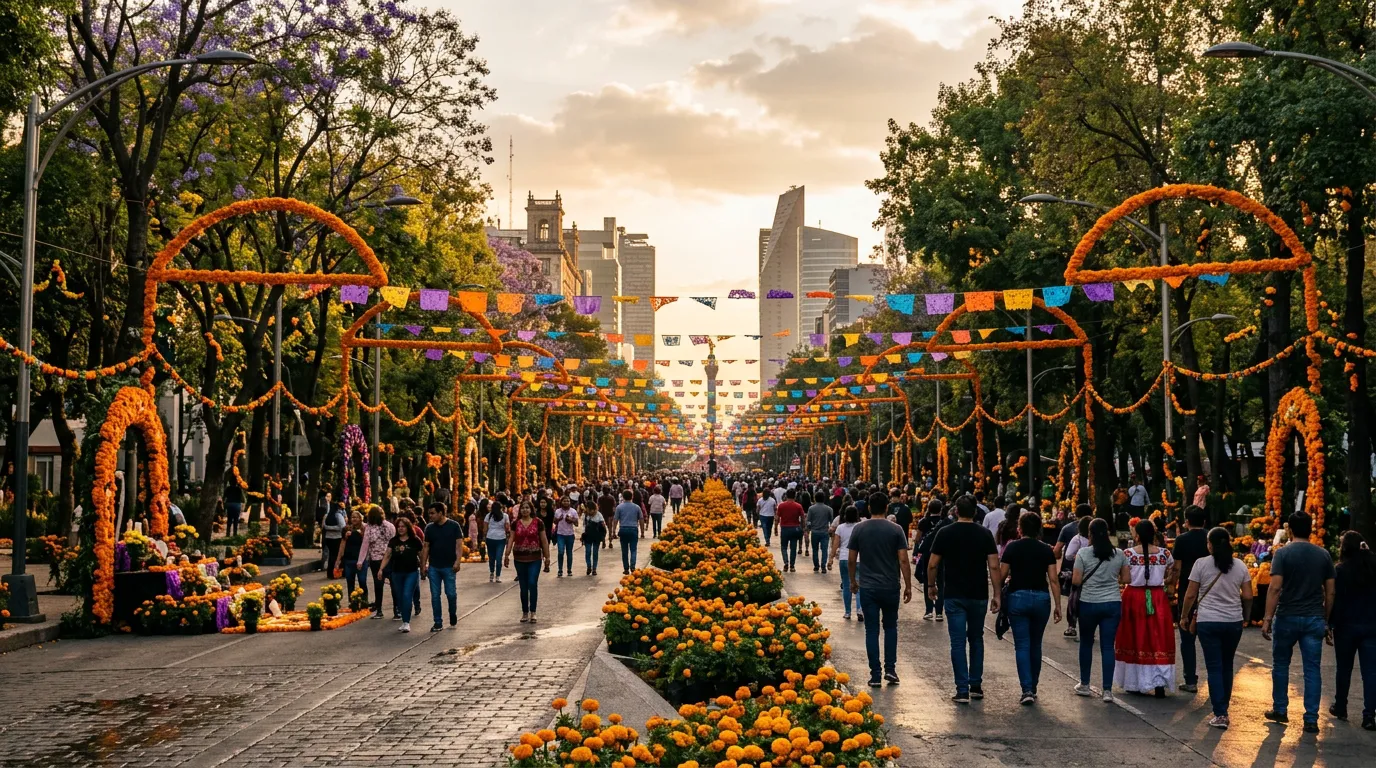
Mexico City has the biggest public program, and most of it is free and in the street. The city's official tourism site lists these dates for 2026 (Turismo CDMX):
| Event, 2026 | When | Where |
|---|---|---|
| Monumental Alebrijes Parade (18th edition) | Saturday 17 October | Zócalo to Paseo de la Reforma |
| Cempasúchil flower festival | 18 October to 1 November | Paseo de la Reforma, between the Ángel de la Independencia and the Ahuehuete |
| "El Camino" light installation | 23 October to 8 November | Ángel de la Independencia to the Puerta de los Leones |
| Mega Procession of the Catrinas | Sunday 25 October | Paseo de la Reforma |
| Monumental Ofrenda and community altars | 29 October to 2 November | Zócalo, and 12 venues across the city |
| Chapultepec festival, "La Puerta entre dos mundos" | 29 October to 4 November | Chapultepec |
| Gran Desfile de Día de Muertos | Saturday 31 October, 14:00 | Paseo de la Reforma to the Zócalo |
| Mixquic | 31 October to 2 November | San Andrés Mixquic, Tláhuac |
The parade. The Gran Desfile de Día de Muertos 2026 is on Saturday 31 October 2026: the date is set in the Mexico City Secretaría de Cultura's call for float designs (official call, PDF). The city's tourism site gives a 14:00 start along Paseo de la Reforma to the Zócalo. The exact starting point and the street closures for 2026 had not been published on 11 October. In 2025 the parade set off at 14:00 on Saturday 1 November from the Puerta de los Leones in Chapultepec, beside Paseo de la Reforma, and ended in the Zócalo (Plaza de la Constitución). The Secretaría de Cultura counted more than 8,000 participants, more than 50 comparsas and more than 1.45 million spectators (cultura.cdmx.gob.mx, 1 November 2025).
The 2026 call asks for floats on three themes: pre-Hispanic roots, popular culture across Mexico's regions, and tributes, with anniversaries such as the centenary of the composer José Alfredo Jiménez and ten years since the death of Juan Gabriel among those suggested.
How to watch it:
- Pick one spot and arrive early. The route runs for hours and the crowd is deepest near the Zócalo. Reforma is wide, so a spot along it is easier to reach and to leave than the square at the end.
- Use the Metro or walk. Streets along the route close to traffic for the parade, so cars and ride apps get stuck.
- Expect the Zócalo to be full after the parade, when the crowd arrives at the ofrenda.
The Zócalo ofrenda. The city's Monumental Ofrenda fills the main square from 29 October to 2 November 2026, and the square is lit from 29 October to 4 November. In 2025 it ended the parade route, decorated with thousands of cempasúchil (marigold) flowers.
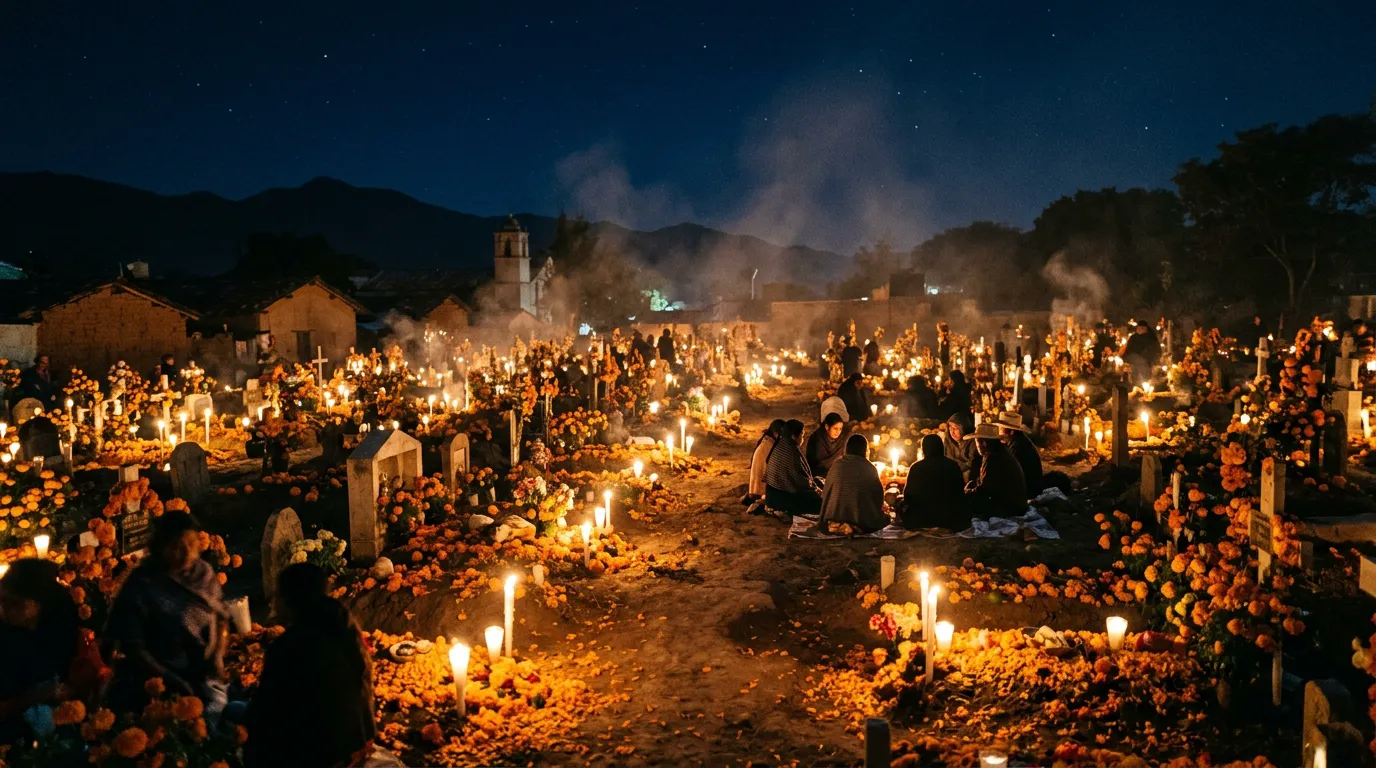
Mixquic. San Andrés Mixquic, a village in the Tláhuac borough in the south of the city, is one of the most visited places in Mexico City on these days. Its best-known night is La Alumbrada on 2 November, when the cemetery is lit by candles (gob.mx). The city's tourism site lists Mixquic's program from 31 October to 2 November 2026. Mixquic is a long way from the center, so plan the trip back before you go.
One more crowd: Formula 1. The Mexico City Grand Prix weekend runs from 30 October to 1 November 2026 (Formula 1), the same weekend as the parade. Hotels and flights for that weekend fill early, so book now if your dates are fixed.
Michoacán: Pátzcuaro, Janitzio and Morelia
Mexico's Secretaría de Cultura counts Pátzcuaro among the most emblematic places to spend the Day of the Dead, with Janitzio, the island in the lake, known for its night of 1 November (gob.mx/cultura). Michoacán calls the festival Noche de Muertos, and its heart is the velación, the vigil families keep at the graves. The state government has announced its third Semana de Celebración de Noche de Muertos from 23 October to 2 November 2026, with more than 700 activities. The program it published on 28 September 2026 includes (Government of Michoacán):
- the National Catrina Fair in Capula, 18 October to 3 November;
- the Catrinas and Catrines parade along Avenida Madero in Morelia's historic center on 1 November;
- the Festival de las Velas in Uruapan, 24 October to 1 November;
- family altars with cempasúchil in the homes of Santa Fe de la Laguna on 30 October;
- the "El camino de las ánimas" canoe route at the Urandén springs, and 17 craft workshops in Pátzcuaro, Tzintzuntzan, Ihuatzio and other lakeside communities.
The state says it will run a special security and civil protection operation for the week, in Morelia, around the lake and in its tourism regions (Government of Michoacán, 29 September 2026).
Read the US advisory before you plan Michoacán. The US State Department rates the state of Michoacán at Level 4, "Do not travel". US government employees may transit the state on Federal Highway 15D, may visit Morelia only by air or by Federal Highways 43 or 48D from Highway 15D, and may visit Lázaro Cárdenas only by air; they "may not travel to other areas of the state of Michoacan". That puts Pátzcuaro and Janitzio outside the areas they may visit, and the advisory strongly advises US citizens to follow the same restrictions. See the safety section below.
Oaxaca
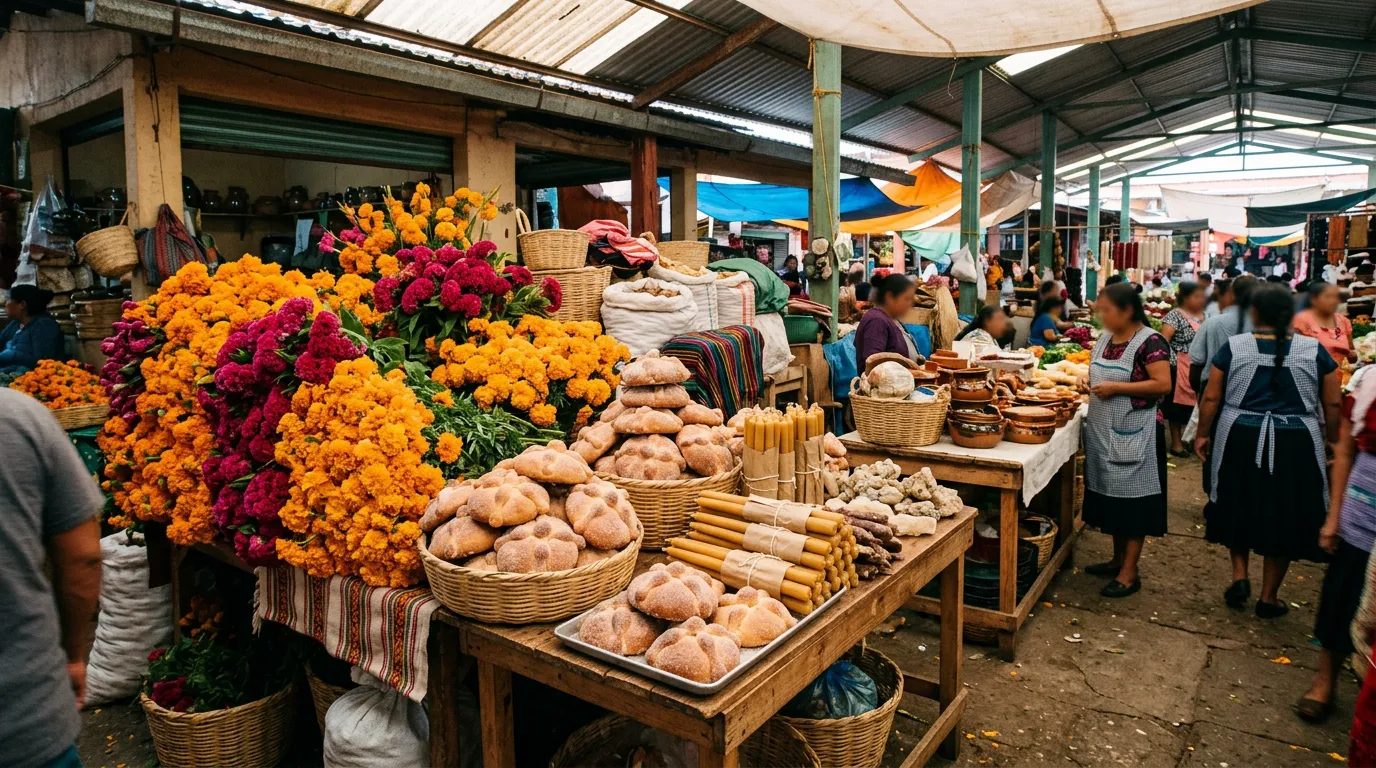
Oaxaca's Day of the Dead is known for its comparsas (costumed street processions), its markets full of marigolds and pan de muerto, and its cemetery vigils. Mexico's Secretaría de Cultura notes that the celebration runs from 31 October to 2 November in different Oaxacan municipalities (gob.mx/cultura).
The newspaper Publimetro reports that Oaxaca's state government will hold its 2026 celebration from 26 October to 3 November, with the Gran Comparsa de Día de Muertos on Saturday 31 October at 18:00, from Calzada Porfirio Díaz to García Vigil (Publimetro). We could not open the state government's own page on 11 October 2026, so check the Oaxaca state government's site for the comparsa schedule before you book an evening around one. The US State Department rates Oaxaca at Level 2 and places no restrictions on travel to Oaxaca City, Monte Albán, Puerto Escondido or Huatulco.
Mérida and Yucatán: Hanal Pixán
In Yucatán the days of the dead are called Hanal Pixán, and they look different from central Mexico. Mexico's Secretaría de Cultura notes that Yucatán's altars have no cempasúchil, sugar skulls or sugared bread, and that the mukbil, a large tamal of corn dough, lard, chicken and spices baked underground in banana leaves, matters more there than Christmas or New Year (gob.mx/cultura).
Mérida's city government runs a Festival de las Ánimas each year. The newspaper Diario de Yucatán reports that the 2026 festival runs from 24 October to 2 November, and that its main event, the Paseo de las Ánimas, is on Friday 30 October from 6 pm to 11 pm, with the streets filled with people dressed as ánimas, the souls of the dead (Diario de Yucatán). The news site POSTA reports that the route starts at Mérida's General Cemetery and ends at San Juan park (POSTA), while El Heraldo de México's Yucatán edition says the procession sets off from around the San Juan, La Ermita and San Sebastián parks (El Heraldo de México). The city publishes its program at merida.gob.mx/animas, which we could not open on 11 October 2026, so check it before you go. Yucatán is the one state on this list at Level 1, "Exercise normal precautions" in the US advisory.
San Miguel de Allende
San Miguel de Allende, in Guanajuato, fills with altars, catrinas and visitors over these days, and has held La Calaca, an arts festival that Mexico's Secretaría de Cultura listed from 31 October to 3 November in 2013 (gob.mx/cultura). We found no official 2026 dates for it on 11 October 2026. The US State Department rates Guanajuato at Level 3, "Reconsider travel", and bars US government employees from Federal Highway 45D and the areas south of it, including Celaya, Salamanca and Irapuato. San Miguel de Allende is not among the restricted areas it names.
Cancún and the Riviera Maya
Beach travelers can see the festival too. Xcaret Park, south of Cancún, holds the Festival de Vida y Muerte from 30 October to 2 November 2026, its 20th edition, with Guanajuato as the guest state, according to Grupo Xcaret's announcement of 12 August 2026 (Grupo Xcaret). It is held inside the park, so check tickets on Xcaret's own site. Our guide to Cancún and Tulum in December covers getting around the coast.
Respecting the cemeteries and altars
Cemetery vigils are family rituals, not shows, even where thousands of visitors come to watch. Some common sense goes a long way:
- Ask before you photograph people, and do not use a flash at a grave.
- Do not touch or take anything from an altar or a grave. The food and flowers are offerings.
- Keep to the paths and do not step over graves or into family plots.
- Keep your voice down, and step back when a family is praying.
- Go with a local guide if you can, especially at night and in small communities.
Book early, and plan for crowds
The week around 1 November is one of the busiest of the year in Mexico City, Oaxaca, Pátzcuaro and Mérida, and in 2026 Mexico City also has the Grand Prix on the same weekend. If your dates are fixed, book flights and rooms now. On the big nights, agree on a meeting point, carry some cash, and expect long waits for taxis and rides after the parade and the vigils.
Safety: what the State Department says
The US State Department rates Mexico as a whole at Level 2, "Exercise increased caution", in its advisory issued on 29 May 2026, and its level differs by state (Mexico Travel Advisory). For the places in this guide:
| State | Level on 29 May 2026 | What the advisory says |
|---|---|---|
| Mexico City | 2, Exercise increased caution | No specific restrictions for US government employees. Petty crime is frequent in tourist and non-tourist areas; take extra care at night outside popular tourist areas |
| Oaxaca | 2, Exercise increased caution | No restrictions for Oaxaca City, Monte Albán, Puerto Escondido or Huatulco. Restrictions in the Isthmus region and on Highway 200 near the Guerrero border |
| Quintana Roo (Cancún, Xcaret, Tulum) | 2, Exercise increased caution | Pay attention to your surroundings after dark; stay in well-lit pedestrian streets and tourist zones |
| Yucatán (Mérida) | 1, Exercise normal precautions | No specific travel restrictions for US government employees |
| Guanajuato (San Miguel de Allende) | 3, Reconsider travel | No travel on Federal Highway 45D or south of it, including Celaya, Salamanca and Irapuato |
| Michoacán (Pátzcuaro, Janitzio, Morelia) | 4, Do not travel | US government employees may only transit on Highway 15D, visit Morelia by air or by Highways 43 or 48D, and visit Lázaro Cárdenas by air; no other areas of the state |
Across Mexico, the advisory tells US government employees, and strongly advises US citizens, not to travel between cities after dark and to use dispatched taxis from regulated stands or app-based services rather than taxis hailed on the street. The emergency number in Mexico is 911. Advisories change, so read the full text again before you go.
Getting there
- Mexico City. Most international flights land at Mexico City Benito Juárez International Airport (MEX). Our Mexico City airport guide covers the terminals, the free Wi-Fi and getting online after customs.
- Cancún and Xcaret. Fly into Cancún International Airport (CUN): see our Cancún airport guide.
- Before you fly. Check whether your phone plan covers Mexico at full speed in will my phone work in Mexico?, and see our eSIM for Cancún guide if the coast is part of the trip.
Staying connected on the Day of the Dead
Your phone does a lot of work on these nights: the map to the parade route, the Metro, the ride home, your tickets and the photos you want to send home.
- Crowds slow mobile data. With more than a million people along Reforma and in the Zócalo, or thousands in a small lakeside cemetery at night, the same cell towers serve everyone, so messages lag and maps crawl. Agree on a meeting point and a time beforehand, and send your videos once the crowd thins.
- Download offline maps of Mexico City, and of Oaxaca, Pátzcuaro or Mérida if you go there, before you leave home. Coverage is thinner in villages and in cemeteries away from town.
- Screenshot your tickets and bookings, so you are not waiting on a slow connection at a gate or a door.
- Carry a power bank. A long night of photos and maps drains a battery fast.
- Check whether your US plan includes Mexico. Many AT&T, T-Mobile and Verizon plans do, but some only at slow speeds, and Mint Mobile charges for a pass: see will my phone work in Mexico? and our guides to Verizon, AT&T, T-Mobile and Mint Mobile roaming.
- Buying a Mexican SIM now means registration. Since January 2026 every new Mexican line has to be registered to its user, with a passport for a visitor: see Mexico SIM card or eSIM in 2026.
A travel eSIM installed at home is the simplest fix: a data-only line that works as soon as you land, with your US number still on your usual SIM for calls and texts. Check that your phone supports eSIM, install it on Wi-Fi before you fly with our guide for iPhone or Android, and compare plans on our Mexico eSIM page.
FAQ
When is Day of the Dead 2026?
The main days are Sunday 1 November and Monday 2 November 2026. Mexico's government describes 1 November as the day for children who have died and 2 November as the day for adults. Many towns start earlier: Mexico City's parade is on Saturday 31 October, and Michoacán's celebration week runs from 23 October to 2 November 2026.
When is the Day of the Dead parade in Mexico City in 2026?
The Gran Desfile de Día de Muertos is on Saturday 31 October 2026, according to Mexico City's Secretaría de Cultura. The city's tourism site gives a 14:00 start along Paseo de la Reforma to the Zócalo. In 2025 it started at the Puerta de los Leones in Chapultepec; the 2026 starting point and street closures had not been published on 11 October 2026.
Is the Mexico City parade free?
Yes. It is a public parade in the street, and you can watch from anywhere along the route. Arrive early for a spot, especially near the Zócalo, where the crowd is deepest.
Where is the best place to celebrate Day of the Dead in Mexico?
It depends on what you want. Mexico City has the parade and the Zócalo ofrenda. Mixquic, in the south of the city, has its candle-lit cemetery on 2 November. Oaxaca is known for its comparsas (the press reports its Gran Comparsa on Saturday 31 October 2026), Mérida for Hanal Pixán (the press reports its Paseo de las Ánimas on Friday 30 October 2026), and Lake Pátzcuaro for its night vigils, though the US State Department rates Michoacán at Level 4, "Do not travel". On the coast, Xcaret holds its Festival de Vida y Muerte from 30 October to 2 November 2026.
Is it safe to go to Mexico for Day of the Dead?
The US State Department rates Mexico at Level 2, "Exercise increased caution", in its 29 May 2026 advisory, with different levels by state: Mexico City, Oaxaca and Quintana Roo at Level 2, Yucatán at Level 1, Guanajuato at Level 3 and Michoacán at Level 4. Read the full advisory for the states you plan to visit.
Will my phone work in Mexico on Day of the Dead?
Most US phones and plans work in Mexico, but data slows in big crowds such as the parade, and some plans give only slow speeds there. Download offline maps and tickets before you go, and consider a travel eSIM if your plan leaves Mexico out or slows down.
Facts checked on 11 October 2026 against the Government of Mexico (gob.mx, INAFED and the Secretaría de Cultura), UNESCO's Intangible Cultural Heritage list, the Mexico City Secretaría de Cultura (the 2026 parade call and its 1 November 2025 bulletin), Mexico City's official tourism site, the Government of Michoacán, Grupo Xcaret, Formula 1's 2026 calendar, the US State Department's Mexico Travel Advisory of 29 May 2026, press reports in Publimetro (Oaxaca) and Diario de Yucatán, POSTA and El Heraldo de México (Mérida), and our Mexico, roaming and airport guides.