
The best eSIM for Switzerland keeps you online from Zurich or Geneva airport to the top of the mountain railways, and keeps working when the train crosses into France, Italy, Germany or Austria. Every plan here is a Europe or Global eSIM with daily or unlimited data, installed at home before you fly. Your usual number stays on for calls and texts.
Switzerland eSIM
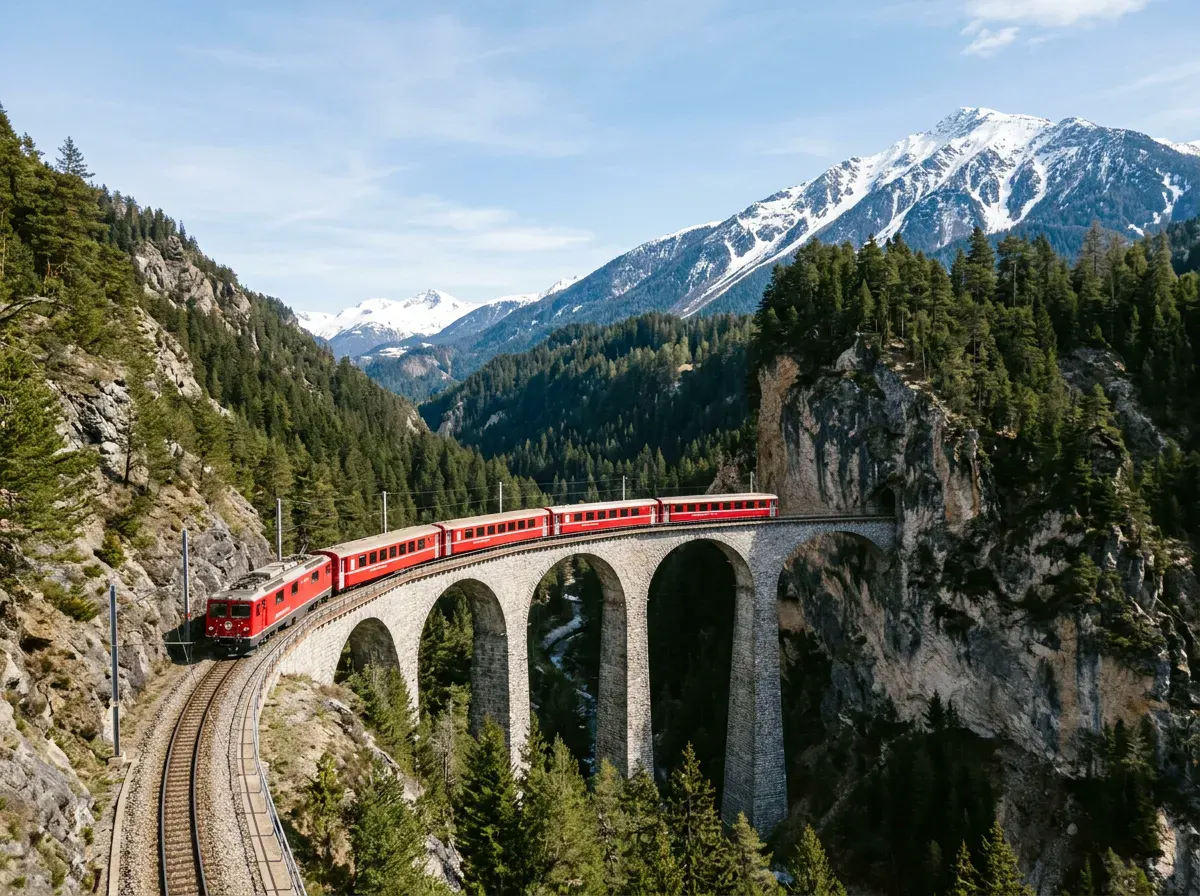
Switzerland eSIM plans
Every plan is data only, priced in US dollars, with no contract and nothing to return.
Our picks
Three plans we would buy ourselves, by the trip you are taking. Every plan we sell is listed below.
Short trip
10.5 GB
1.5 GB a day
7 days
A week or so away: maps, messages, rides and the odd video call.
Part of the Europe bundle
$11.99
Buy this planLong trip
22.5 GB
1.5 GB a day
15 days
Two weeks or more, with room for photos, streaming and work email.
Part of the Europe bundle
$19.99
Buy this planHeavy use
Unlimited data
15 days
You stream, work online or share your connection every day.
Part of the Europe bundle
$29.99
Buy this plan
Also covered by Europe
One eSIM that also works in the other countries of the bundle, for a trip that crosses borders.
Also covered by Global (170 countries)
One eSIM that also works in the other countries of the bundle, for a trip that crosses borders.
See every country in Global (170 countries)
Also covered by Global (75 countries)
One eSIM that also works in the other countries of the bundle, for a trip that crosses borders.
See every country in Global (75 countries)
No eSIM, no charge. If your payment goes through and we cannot issue your eSIM, we refund you in full. Refund policy
Real people. A person answers every day, 07:00 to 23:00 Paris time, within 2 hours. How we look after you
Safe checkout. Secure payment by Stripe. Cards, Apple Pay and Google Pay.
Local networks. See which ones it uses in Switzerland
Which plan fits a Switzerland trip
There is no Switzerland-only plan here. Every plan on this page is a bundle: the Europe plan covers Switzerland, Liechtenstein and 28 other countries, and the Global 75 and Global 170 plans reach further. Your data allowance is shared across every country on the list, so one eSIM, installed once, covers the whole trip. Pick by trip:
- A week in Zurich, Lucerne and the Bernese Oberland: the 7 day Europe plan with 1.5 GB a day covers train times, maps, mountain weather, messaging and photos. Take the 7 day unlimited plan if you make video calls or share your connection with a laptop.
- The scenic trains: the Europe plan. The Bernina Express ends in Tirano, in Italy, and Italy is on the same list, so the eSIM keeps working across the border.
- Geneva with Chamonix or Annecy: the Europe plan covers France too.
- Lake Constance, or the Alps with Germany and Austria: the Europe plan covers both, and Liechtenstein.
- Two weeks or more with Italy, France or the UK: the 15 day Europe plan, daily or unlimited.
- A month or longer: the 30 day Europe plan with 1.5 GB a day. Unlimited plans run up to 15 days.
On the daily plans, speed drops sharply once the day's 1.5 GB is used and comes back when the allowance resets. See fixed, daily or unlimited for how each type behaves.
Why roaming costs more in Switzerland
Switzerland is not in the European Union, so the EU's "roam like at home" rules do not cover it. Many European phone plans charge extra for data in Switzerland, sometimes a lot, and US carriers charge their usual daily pass. A travel eSIM priced for the whole trip keeps the bill predictable.
Trains, passes and the mountains
Most visitors get around Switzerland by train, and the phone does a lot of the work:
- The SBB Mobile app has timetables, platforms, delays and tickets for the whole network, including most mountain railways and boats. If you have a Swiss Travel Pass, keep it in the app or saved to your phone, so a ticket check never depends on a signal.
- The scenic routes, such as the Glacier Express, the Bernina Express and the GoldenPass line, are covered along most of the way, with short drops in tunnels and in the deepest valleys. The panoramic cars do not need data, but your photos will want it later.
- Mountain railways and cable cars: the main summit stations and resorts are usually covered. Signal can drop on the way up, behind ridges and high on the trails.
- Mountain weather changes fast. Check the forecast and the webcams before you pay for a summit ticket: a summit in cloud shows you nothing.
Coverage across Switzerland
Switzerland's three networks cover the cities, the rail lines and the main resorts well. Where it changes:
- Zurich, Geneva, Basel, Bern and Lucerne: strong across the cities.
- Ski and mountain resorts such as Zermatt, Grindelwald, Wengen, St. Moritz and Verbier: good in the villages and on the main slopes, with gaps off piste and in side valleys.
- Hiking trails: often covered near the huts and lifts, often not in between. Download offline maps and tell someone your route.
- Long tunnels: some keep a signal, some do not. Download what you need before a long journey.
Near the borders
Switzerland borders France, Germany, Austria, Liechtenstein and Italy, and the Europe plan covers all five. Near a border, your phone can switch to a foreign network without you noticing, and the eSIM keeps working on either side.
Basel airport (EuroAirport) is on French soil, with a Swiss sector, so your phone may connect to a French network when you land. That is fine on the Europe plan.
Arriving in Switzerland
Install the eSIM at home on Wi-Fi a day or two before you fly. When you land, turn on data roaming for the eSIM line only and keep it off on your usual SIM. Zurich and Geneva airports both have a railway station under the terminal, so you can check the next train in the SBB app from the arrivals hall and walk straight to the platform.
How much data do you need?
Most visitors use about 1 GB a day for train times, maps, mountain weather, messaging and photos. Video calls, streaming and sharing your connection with a laptop push that up quickly. For a long stay with remote work, look at the unlimited plans.
eSIM or roaming?
Most US carriers charge a daily fee for each day you use your phone in Switzerland, or limit what is included: see will my phone work in Europe? and our guides to AT&T, Verizon and T-Mobile. Unlike in the EU, many European phone plans charge extra in Switzerland too. More in travel eSIM vs international roaming.
Before you go
- Entering Switzerland: Switzerland is in the Schengen area, where passports are now registered under the EES. Read Entering Europe in 2026.
- Several countries in one trip: eSIM for Europe explains how a multi-country plan works and which countries are on the list.
- Check your phone first: a travel eSIM needs an unlocked phone: how to check.
Networks in Switzerland
Switzerland has three mobile networks: Swisscom, Sunrise and Salt. Coverage is excellent in the cities, along the rail lines and in the main mountain resorts, including many lifts and tunnels. A travel eSIM connects to one of them as a roaming partner, which is why data roaming must be on for the eSIM line. The partner network can differ from plan to plan, so check the plan details, or ask us at support@esimlounge.com before you buy.
How to install your eSIM
Install it at home before you fly, then switch it on when you land.
Check your phone
Your phone must support eSIM and be carrier unlocked. Most phones from the last few years do.
Scan the QR code
Scan the code from your email while you still have Wi-Fi at home. It takes about two minutes.
Switch on when you land
Turn on the eSIM line and data roaming for it. Keep your usual SIM for calls and texts if you like.
Switzerland eSIM questions
What is the best eSIM for Switzerland?
It depends on your trip. For a week of trains, lakes and mountains, a daily plan with 1.5 GB a day is enough for most people. If you stream, make video calls or share your connection, take unlimited. The Europe plan also covers France, Italy, Germany, Austria and Liechtenstein, so a trip across the border needs no second install.
Does my EU roaming cover Switzerland?
Not automatically. Switzerland is outside the EU, so the EU roaming rules do not apply, and many European phone plans charge extra there. Check your plan; if it does not include Switzerland, a travel eSIM avoids the charges.
Does the eSIM work on the Glacier Express and Bernina Express?
Along most of the route, yes, with short drops in tunnels and the deepest valleys. The Bernina Express ends in Tirano, Italy, and Italy is on the Europe plan, so the eSIM keeps working there.
Does it work in the ski resorts and on the mountain trains?
In the main resorts, on the main slopes and at most summit stations, yes. It can drop on the way up, in side valleys and high on remote trails.
Does it work in Liechtenstein?
Yes. Liechtenstein is on the Europe plan's list of 30 countries, with Switzerland, Austria and Germany.
Will my US phone work in Switzerland?
Most recent US phones work on Swiss networks. To use a travel eSIM, the phone must support eSIM and be carrier-unlocked: how to check. Your US SIM stays in the phone for calls and texts while the eSIM carries your data, so keep data roaming off on your US line to avoid your carrier's daily fees.
Will I keep my phone number?
Yes. Your usual SIM stays in the phone for calls and texts, and the eSIM carries your mobile data. Keep data roaming off on your usual SIM to avoid roaming fees.
When does the plan start counting days?
On most plans the days start when the eSIM first connects to a network in a covered country, not when you install it. The plan details say how yours works.