
Last updated: 10 October 2026
Christmas in Japan is lights, cake and a dinner date. New Year is the real family holiday, and it is the week when much of the country closes. If you are flying in for the end of 2026, the two halves of the trip feel completely different: busy, bright cities until 25 December, then quiet streets, full shrines and packed trains around 1 January.
How Japan does Christmas
Christmas is not a national holiday in Japan. The Cabinet Office's list of public holidays has nothing in December, and the only New Year date on it is 1 January (Cabinet Office). On 24 and 25 December, offices, shops and trains run as usual.
What Japan does instead, according to JNTO:
- It is a couples' holiday. Couples go out for a romantic dinner rather than staying in with family. Book restaurants for 24 December well ahead, and expect set menus.
- Christmas cake is a strawberry shortcake: sponge, whipped cream and strawberries. A confectioner's slogan in 1922, "Let's eat cake at Christmas!", is credited with starting it. Bakeries, department stores and convenience stores take orders weeks in advance.
- Fried chicken is the Christmas dinner of choice for many families, a habit that grew out of a fast food chain's advertising campaign in the 1970s. Orders open long before the day, and queues outside chicken shops on 24 December are a normal sight.
- Christmas markets in the German style have spread to several cities, and the light displays are the main event (below).
Families gather for New Year instead. That is the holiday that changes how the country works for a week.
Illuminations worth seeing, with 2026 dates
Japan's winter illuminations start in November and many run on through the winter (JNTO). These are the ones whose 2026 dates were published by their organizers when we checked on 10 October 2026.
| Illumination | Where | Dates |
|---|---|---|
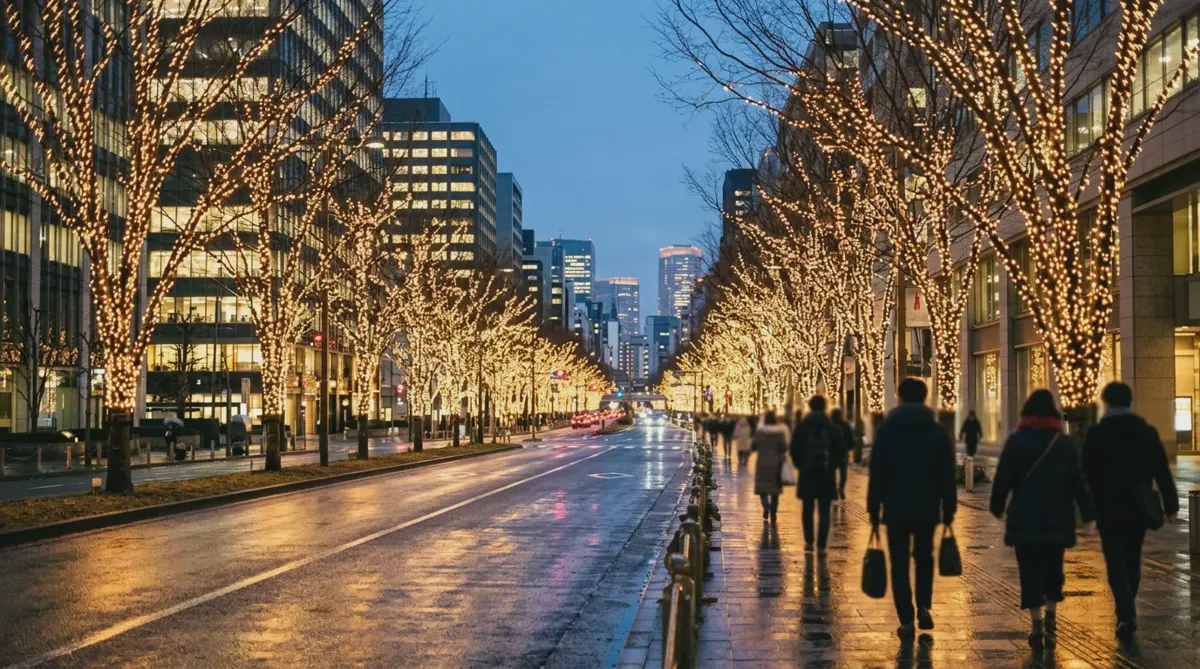
| Keyakizaka Illumination, Roppongi Hills | Tokyo | 5 November to 25 December 2026, 17:00 to 22:00 |
| Roppongi Hills Christmas Market | Tokyo | 21 November to 25 December 2026, 11:00 to 21:00 |
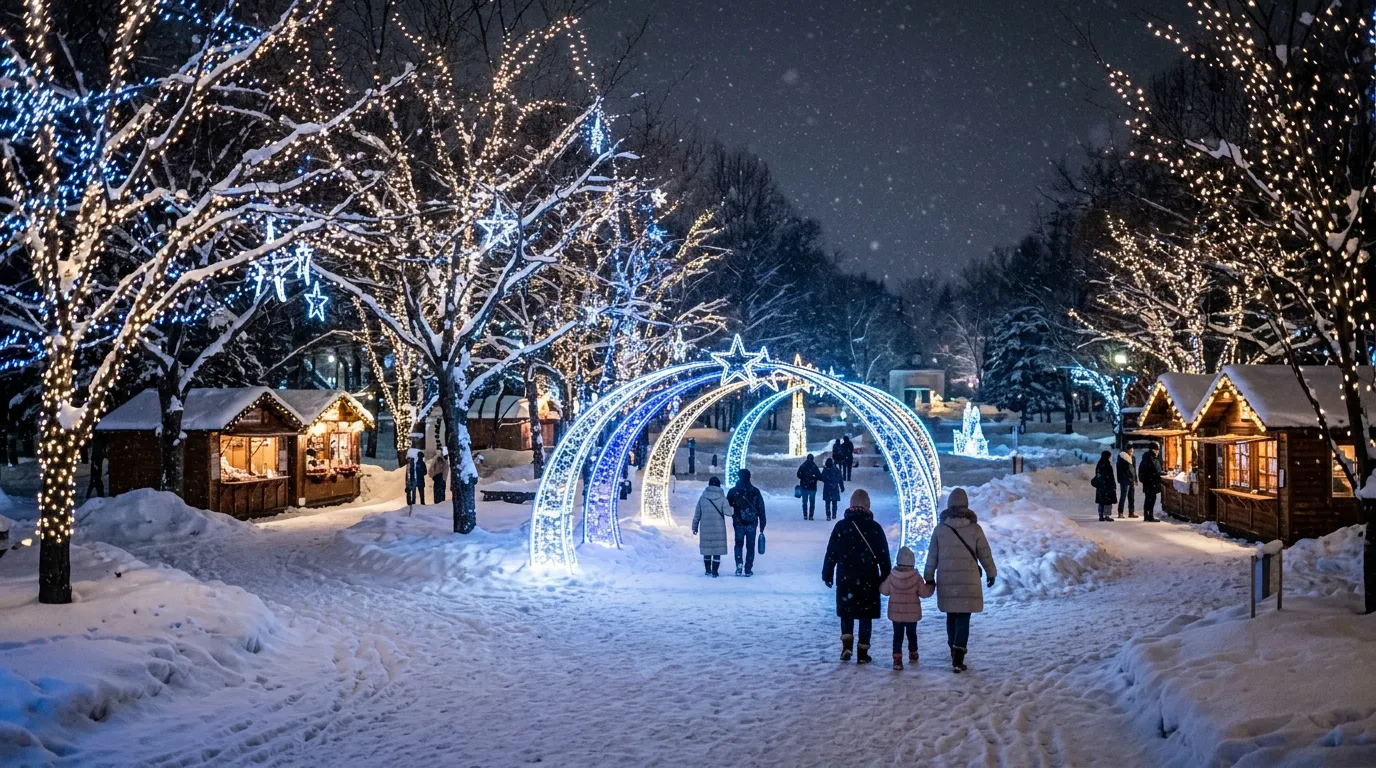
| Sapporo White Illumination, Odori Park | Sapporo | 20 November to 25 December 2026 |
| Sapporo White Illumination, Ekimae-dori | Sapporo | 20 November 2026 to 11 February 2027 |
| Sapporo White Illumination, Minami 1-jo-dori, Akapla and station south exit | Sapporo | 20 November 2026 to 14 March 2027 |
| Munich Christmas Market in Sapporo | Sapporo | 20 November to 25 December 2026 |
| Nabana no Sato Winter Illumination | Kuwana, Mie (near Nagoya) | 17 October 2026 to 31 May 2027 (closed 6 and 7 January) |
| Kobe Luminarie (32nd edition) | Kobe | 29 January to 7 February 2027 |
Roppongi Hills, Tokyo
Mori Building lights the zelkova trees of Keyakizaka, the slope below Roppongi Hills, from 5 November to 25 December 2026, 17:00 to 22:00 (Mori Building press release). A Christmas market runs in the plaza from 21 November.
Sapporo White Illumination
Sapporo's illumination, in its 46th year, opens on 20 November 2026 across the city center. The Odori Park displays close on 25 December, the Ekimae-dori street lights on 11 February 2027, and the lights on Minami 1-jo-dori, Kita 3-jo Plaza (Akapla) and the JR Sapporo Station south exit plaza on 14 March 2027. Nakajima Park has its own display planned for January 2027 (Visit Hokkaido, Sapporo tourism event list). The Munich Christmas Market in Sapporo runs alongside, 20 November to 25 December. With snow on the ground, this is the most wintry of Japan's light shows.
Nabana no Sato, Mie
Nabana no Sato, a flower park in Kuwana near Nagoya, runs one of Japan's largest illuminations from 17 October 2026 to 31 May 2027, closed on 6 and 7 January. From 23 to 25 December it opens in the evening only, with date-specific tickets (Nabana no Sato).
Kobe Luminarie, after the holidays
Kobe Luminarie is held in memory of the victims of the 1995 Great Hanshin-Awaji Earthquake. Its 32nd edition runs from 29 January to 7 February 2027 in Meriken Park, Higashi-Yuenchi Park and the former Foreign Settlement. Part of the Meriken Park venue is ticketed: 500 yen in advance on a weekday, 1,000 yen on the day (City of Kobe). It is a reason to stay into late January, not a Christmas event.
Not announced yet: Marunouchi and Tokyo Midtown
The Marunouchi Illumination around Tokyo Station and Tokyo Midtown's Christmas lights in Roppongi had not published their 2026 dates on 10 October 2026. Last season, Marunouchi ran from 13 November 2025 to 15 February 2026 (GO TOKYO) and Tokyo Midtown from 13 November to 25 December 2025 (GO TOKYO). Expect similar windows, and check the official sites before you plan an evening around them.
New Year: what closes and what to do
New Year, shogatsu, is Japan's biggest holiday. JNTO says the holiday period typically runs from 29 December to 3 January, depending on how the days fall, with some businesses closing for a few days (JNTO). In practice:
- Many small, family-run restaurants and shops close, some for the whole period.
- Museums and some attractions close for several days around 1 January. Each sets its own dates, so check before you go.
- Banks and government offices close. Convenience stores and most chain restaurants stay open, and a convenience store ATM is the easiest way to get cash.
- Department stores reopen early in January with their New Year sales and lucky bags (fukubukuro). Shopping for gifts? From 1 November 2026, tax-free shopping is a refund you claim at departure: see how the new refund works.
- Shrines and temples are the busiest places in the country.
New Year's Eve
On 31 December, families eat toshikoshi soba, buckwheat noodles for a long life, and many people head out to a shrine or temple before midnight. At Buddhist temples, the bells ring 108 times around midnight in joya no kane, to let go of the year's worldly desires (JNTO). In Tokyo, Zojo-ji, below Tokyo Tower, is one place to hear it (GO TOKYO). Some people stay up for hatsuhinode, the first sunrise of the year.
Do not plan around a street countdown at Shibuya Crossing: Shibuya has canceled it in recent years, and nothing had been announced for 2026 on 10 October.
Hatsumode: the first shrine visit
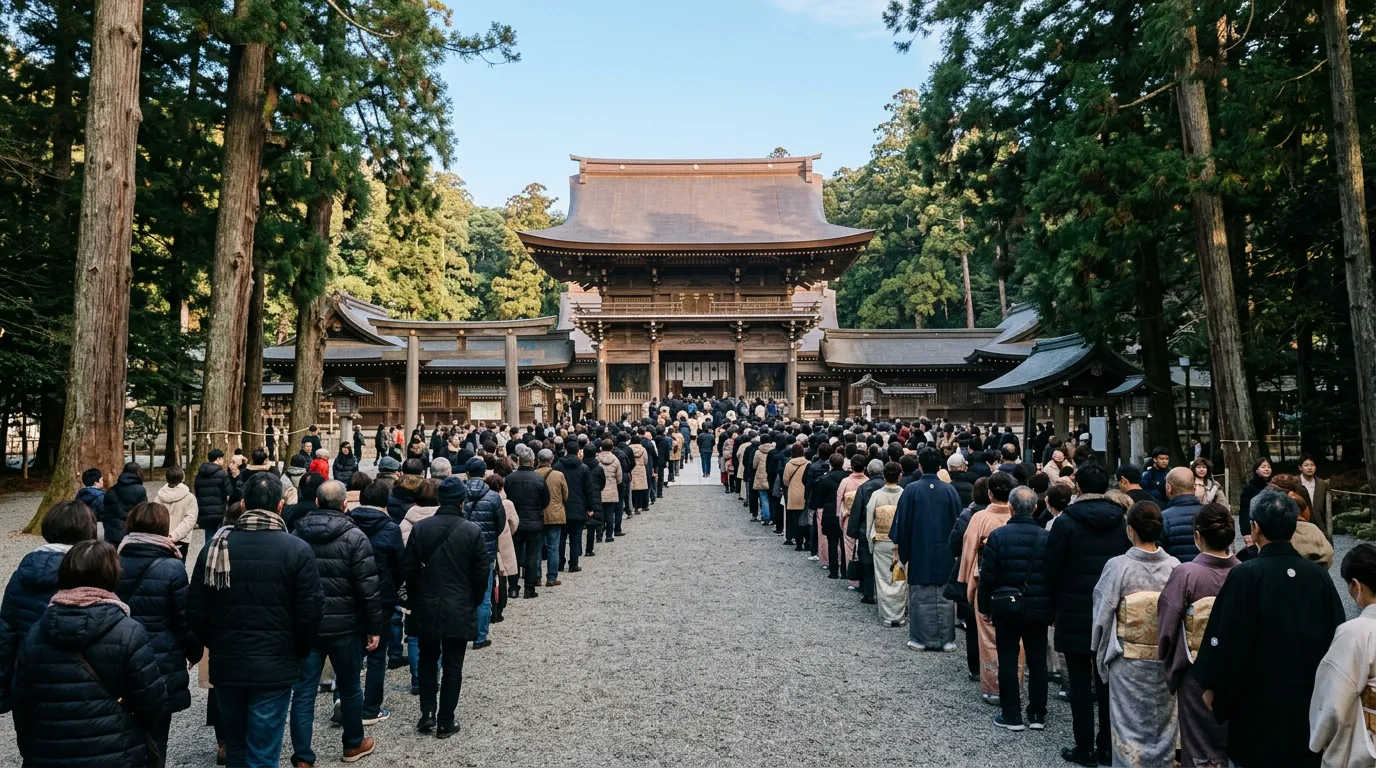
Hatsumode is the first visit of the year to a shrine or temple, to pray for luck in the year ahead. Meiji Jingu in Tokyo draws several million people between New Year's Eve and 3 January and stays open all night on 31 December (GO TOKYO). Expect long queues on the night and on 1 January. If you want the atmosphere without the crush, go on 4 January or later, or pick a smaller neighborhood shrine.
On 2 January, the Imperial Palace holds its New Year greeting, when the Imperial Family appears on a palace veranda several times. The Imperial Household Agency published the 2026 times in early December 2025, so expect the 2027 times around then (nippon.com).
Getting around over the holidays
Trains run every day of the holidays, including 1 January, but the whole country moves at once. JNTO calls the New Year period a busy and expensive time to travel (JNTO). Long-distance trains fill up as people leave the cities in the last days of December and come back in the first days of January, so reserve shinkansen seats early.
All-night trains on New Year's Eve are announced by each railway every year. For New Year's Eve 2025, JR East ran trains through the night on six Tokyo-area lines, including the Yamanote Line (JR East). The plans for 31 December 2026 had not been announced on 10 October 2026: check JR East and your local line in December before counting on a train home after midnight.
Paying for transport is easiest on your phone. JR East's Welcome Suica Mobile app, for visitors on iPhone, issues a Suica you can top up before or after you land and use on trains, buses and in shops (JR East). Without an iPhone, a physical Welcome Suica card does the same job.
Staying connected in the crowds
The busiest nights of the year are the ones when your phone matters most: finding your friends after a countdown, checking whether the last train is running, reading a menu at the one restaurant still open on 2 January. They are also the nights when mobile networks are under the most strain. Tens of thousands of people sharing the same cells at a shrine or a countdown can slow data to a crawl until the crowd moves on.
A few habits make the difference:
- Agree a meeting point before you go in. Messages can arrive late in a dense crowd.
- Download offline maps of the areas you will visit, and screenshot tickets, restaurant bookings and train times.
- Download a translation app's Japanese language pack so it works without a signal. New Year menus and closing notices are often only in Japanese.
- Keep your phone charged. Cold nights and constant map use drain batteries fast: carry a power bank.
- Do not rely on free Wi-Fi. Shops and cafes that offer it may be closed over New Year.
A Japan eSIM installed before you fly gives you data from the moment you land, with nothing to collect or return during the holiday closures. If you are deciding between that and a rented router, see eSIM vs pocket Wi-Fi in Japan. Check that your phone supports eSIM, then follow the install guide for iPhone or Android at home, on Wi-Fi. Plans for every length of trip are on our Japan eSIM page.
FAQ
Is Christmas a holiday in Japan?
No. 25 December is not a public holiday, so offices, shops and trains run normally. Christmas is celebrated as a festive and romantic occasion, with illuminations, Christmas cake and dinners out, rather than as a family or religious holiday.
What is closed in Japan over New Year?
The New Year holiday typically runs from 29 December to 3 January. Many small restaurants and shops, banks, government offices and museums close for some or all of it. Convenience stores, most chain restaurants, shrines and temples stay open, and department stores reopen early in January with their sales.
What do people eat at Christmas in Japan?
Christmas cake, a strawberry and whipped cream sponge, and fried chicken. Both are ordered weeks ahead, and the queues on 24 December are part of the tradition.
Where can I see Christmas lights in Japan in 2026?
In Tokyo, the Keyakizaka Illumination at Roppongi Hills runs from 5 November to 25 December 2026. In Sapporo, the White Illumination opens on 20 November 2026, with some displays lit until 14 March 2027. Nabana no Sato near Nagoya is lit from 17 October 2026 to 31 May 2027.
Do trains run all night on New Year's Eve in Tokyo?
Some do, and the plans change every year. For New Year's Eve 2025, JR East ran all-night trains on six Tokyo-area lines including the Yamanote Line. Many other lines run no all-night service. The plans for 31 December 2026 are announced closer to the date, so check in December.
Is it a good idea to visit Meiji Jingu for New Year?
Yes, if you like crowds: it draws several million visitors between 31 December and 3 January and is open all night on New Year's Eve. For a calmer visit, go from 4 January or choose a smaller shrine.
Facts checked on 10 October 2026 against official event and tourism pages.